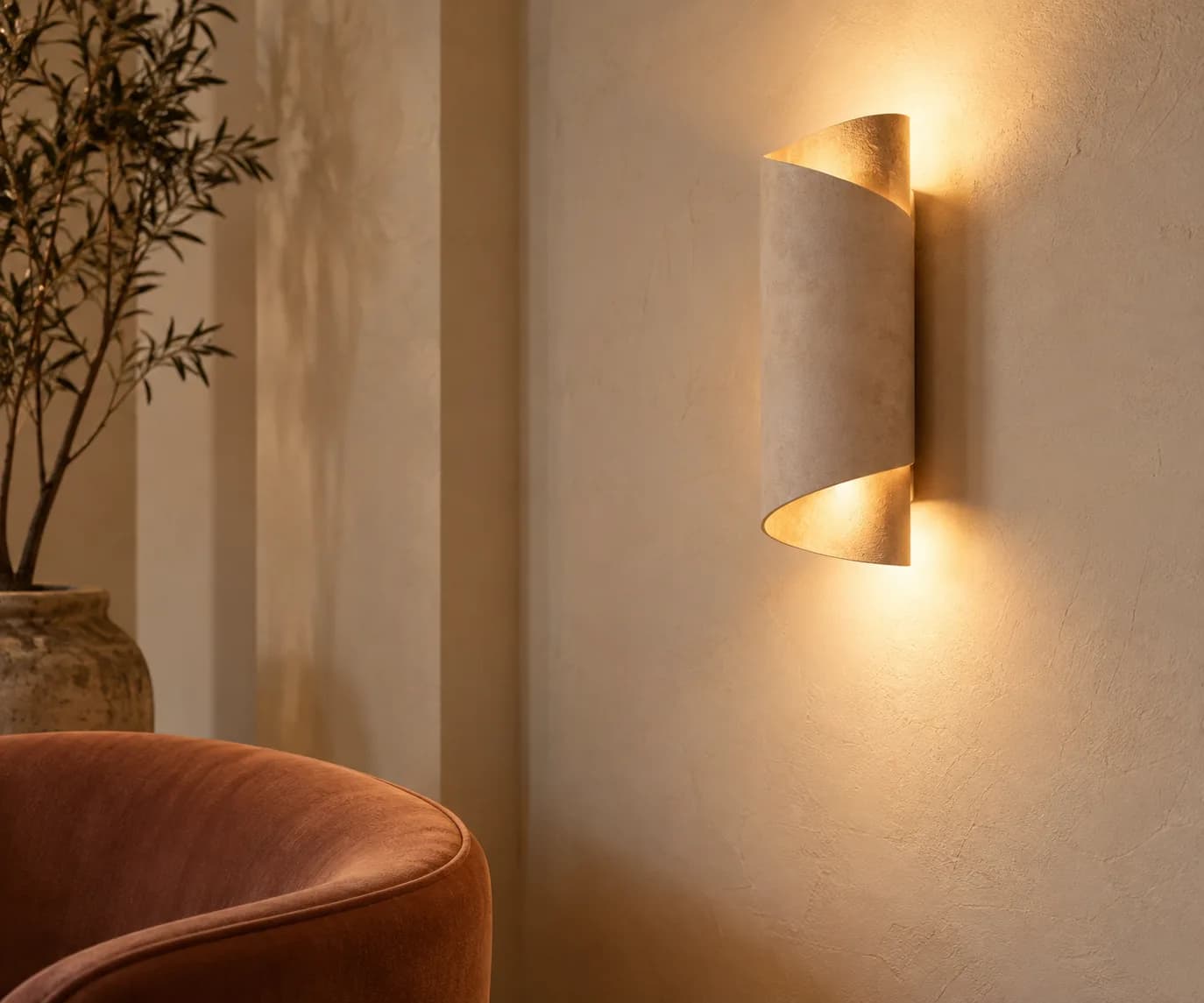
Alabaster, Marble or Travertine? A Stone Lighting Guide
Compare alabaster, marble and travertine lighting by appearance, variation, weight, cleaning and sample approval before sourcing natural stone fixtures.
Natural stone can make a simple wall light or pendant feel distinctive. The important buying decision is not just which stone looks best in a photograph. Buyers also need to understand variation, thickness, fixture construction, cleaning and the appearance of replacement pieces.
Use this guide to prepare a material brief for decorative lighting. The trade name of a stone is a starting point; the actual sample and finished construction should decide approval.
Start by Confirming What the Material Actually Is
Ask whether a component is natural stone, a stone veneer, a composite or a resin imitation. Also clarify whether the named material is the shade, a decorative ring or only the base. These constructions can look similar online but have different visual and handling characteristics.
The Museum of Fine Arts CAMEO materials database describes alabaster as a fine-grained translucent gypsum and notes historical use of the name for other minerals. That is a useful reason to request the supplier’s specific material description instead of assuming the name defines every property.
Compare the Look With the Light On and Off
| Material direction | Visual question | Sample to request |
|---|---|---|
| Alabaster-style shade | How does the particular piece transmit light? | Finished shade at the intended thickness with the proposed source |
| Marble component | How strong and varied is the veining? | Several pieces showing the accepted range |
| Travertine component | What pore pattern and surface finish will be visible? | Close-up of edges, filled areas and the finished surface |
Do not judge translucency from an unlit slab alone. Review the assembled lamp, because stone thickness, the location of the source and internal support can change the appearance. Some stone components are decorative and are not intended to transmit light.
Define an Acceptable Range of Natural Variation
One approved photograph is a weak reference for an order containing many rooms. Request a group of samples that shows the proposed variation in tone, veining and texture. Identify which differences are welcome and which would undermine the design.
For paired bedside lights, decide whether the aim is close matching or intentionally individual pieces. Record the reference samples, viewing conditions and acceptance notes. Keep at least one approved finished sample available for the production inspection.
Check Weight, Support and Maintenance Access
Ask for the finished fixture weight and installation instructions, then coordinate the support with the project installer. A heavy stone component should not be assessed only by its visible dimensions. Also confirm how the shade is retained and how a technician reaches the lamp or driver.
In a hotel, consider the route used to carry replacement pieces, the availability of spare shades and whether two staff members are needed for safe handling. These questions belong in the purchasing discussion before the design is fixed.
Give Housekeeping a Material-Specific Care Note
The Natural Stone Institute advises identifying the stone composition before choosing cleaners. It notes that calcium-carbonate stones, including marble and travertine, are sensitive to acidic products. For a luminaire, combine stone-care instructions with the fixture manufacturer’s electrical and surface-care instructions.
Ask for the approved cleaning method for the exact stone, coating and assembly. Do not assume that a bathroom cleaner is suitable for a decorative shade, or that all stones can be wetted in the same way. Demonstrate the proposed maintenance process on an approved sample.
A Better Stone Lighting Purchase Brief
- Named material, construction and finished thickness.
- Images with the light both switched on and off.
- Accepted tone, veining, pores and edge treatment.
- Weight, fixing method and access for maintenance.
- Care instructions and replacement-shade availability.
- Reference samples for production approval.
When enquiring about a Dwellrose stone fixture, identify the intended room, quantity and whether matching pairs are important. Request confirmation of the exact material and sample options for the chosen design.
Sources and Further Reading
Send the drawing. We will price the finish.
Include quantities, color temperature, destination port and whether the finish is stock or custom. Final specifications, documentation, minimum quantities and lead times are confirmed during quotation.